Tankless vs. Tank Water Heaters: Which Is Right for Your Memphis Home?
Quick Answer
Tankless hot water heaters cost more upfront but last longer and use less energy. Tank water heaters cost less to install and handle simultaneous hot water use better, but they wear out sooner. The right choice depends on your household size, budget, and how much hot water you use at once.
| Tankless | Tank | |
| Upfront cost | $500 – $2,000 | $400 – $1,800 |
| Lifespan | 20+ years | 8 – 12 years |
| Energy efficiency | Higher | Lower |
| Space needed | Compact, wall-mounted | Requires a closet or utility space |
| Best for | Energy savings, long-term value | Large households, simultaneous use |
What’s the Difference Between Tankless and Tank Water Heaters?
Both types get the job done, but they get there in very different ways.
How Tank Water Heaters Work
A conventional tank water heater stores anywhere from 20 to 80 gallons of water and keeps it heated around the clock. When you turn on the hot tap, heated water is pulled from the top of the tank and replaced with cold water at the bottom. It’s a simple, proven system found in most Memphis homes. But once that stored water runs out, you’re waiting for the tank to refill and reheat before you get hot water again.
How Tankless Water Heaters Work
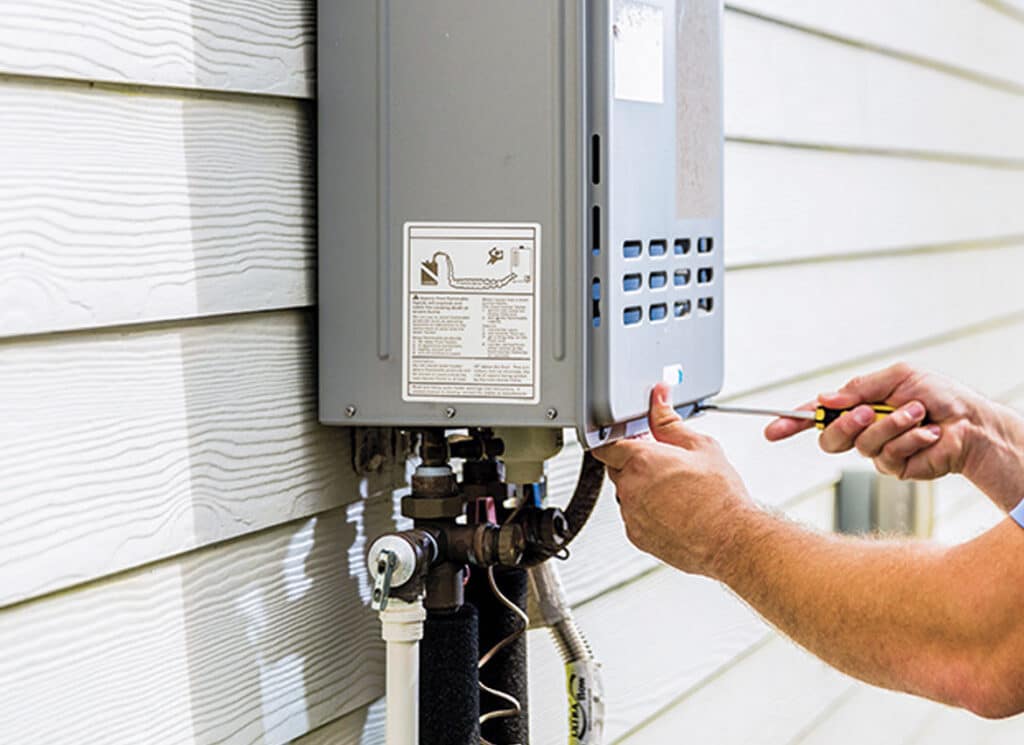
Tankless hot water heaters skip the storage tank entirely. Instead, water passes through a heat exchanger and gets heated instantly, right when you turn on the tap. Nothing sits around waiting to be used, and nothing goes to waste by keeping water hot when you’re not using it. Tankless units come in both gas and electric models, so there’s flexibility depending on what’s already set up in your home.
Tankless vs. Tank: Full Comparison
Energy efficiency. Tankless units only heat water on demand, so they avoid the standby heat loss that comes with keeping a full tank hot all day. That usually translates into lower monthly energy bills.
Hot water supply. Tankless systems don’t run out of hot water the way tank systems can, but they do have a flow rate limit. This is often the #1 complaint among homeowners with tankless units. If you’re running the shower, dishwasher, and washing machine at the same time, a tankless unit may struggle to keep up. Tank systems, by contrast, have a fixed supply that can run out but don’t have the same ceiling for simultaneous use.
Lifespan. Tankless water heaters typically last 20 years or more. Tank water heaters usually last 8 to 12 years. Over the life of your homeownership, that translates to one tankless replacement versus two or three tank replacements.
Space. Tankless units mount to a wall and take up a fraction of the space a tank does, which matters if you’re working with a small utility closet or garage.
Maintenance. Tankless systems need an annual flush to prevent mineral buildup, especially in areas with harder water (luckily, Memphis isn’t one of them). Tank systems need periodic flushing, too, but the maintenance routine is usually simpler and more familiar to most homeowners.
Repair. If something on your tankless water heater goes wrong, a technician can typically diagnose and fix issues quickly.
Pros and Cons
Tankless Water Heater Pros and Cons
Pros:
- Continuous hot water supply
- Greater energy efficiency
- Compact, space-saving design
- Longer lifespan (often 20+ years)
- Lower standby heat loss
- Simple troubleshooting and repairs
Cons:
- Higher upfront cost
- May require plumbing or gas line upgrades during installation
- Limited flow rate during high-demand periods
- Larger homes may need more than one unit
Tank Water Heater Pros and Cons
Pros:
- Lower upfront cost
- Simpler installation
- Handles simultaneous hot water use well
- Compatible with most existing home setups
Cons:
- Can run out of hot water
- Higher ongoing energy costs
- Shorter lifespan (8–12 years)
- Requires more physical space
Tankless vs. Tank Water Heater Cost
| Tankless | Tank | |
| Unit cost | $500 – $2,000 | $400 – $1,800 |
| Installation cost | $1,000 – $3,000 | $700 – $1,500 |
| Annual energy cost | $200 – $350 for natural gas $450 – $600 for electric | $200 – $400 for natural gas $780 – $1,200 for electric |
| Annual maintenance | $40 – $150 for DIY $100 – $350 for professional tune-up | $10 – $30 for DIY $75 – $250 for professional tune-up |
Tankless water heaters cost more to buy and install, but the lower energy bills and longer lifespan often even things out — sometimes in your favor — over time. Tank water heaters are the more affordable choice up front, which matters if you need a replacement quickly or you’re working with a tighter budget.
Which One Is Right for Your Household?
- Large families or simultaneous hot water use: A tank system, or multiple tankless units, will serve you better than a single tankless unit.
- Energy savings are the priority: Tankless wins here, month after month.
- Long-term value matters most: Tankless typically comes out ahead thanks to its longer lifespan and lower operating costs.
- Lowest possible upfront cost: Tank systems are the more budget-friendly option at purchase.
Ask yourself:
- How many people live in your home, and how much hot water do you use at once?
- Do multiple showers or appliances run simultaneously?
- Is saving on your monthly energy bill a priority?
- Is your home’s plumbing and gas setup ready for a tankless installation, or would it need upgrades?
Professional Installation Matters
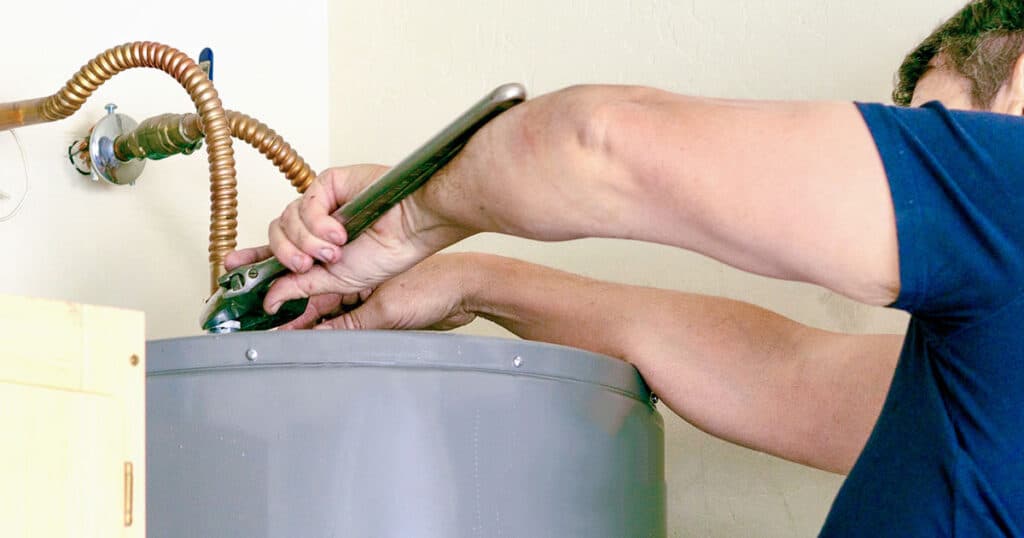
Whichever system you choose, water heater installation isn’t a DIY project. A licensed plumber sizes the unit correctly for your household, confirms your gas lines and venting can support it, checks your water pressure and flow rate, and installs everything to code. Get this step wrong, and you end up with exactly the problems people blame on the water heater itself: insufficient hot water, short cycling, or a system that never runs efficiently.
Get Expert Water Heater Advice in Memphis
If you’re still weighing tankless against tank, our team can help. We’ll walk through your household’s hot water usage, your home’s plumbing setup, and your budget to recommend the right system, then handle the installation from start to finish.
Frequently Asked Questions
For most households, yes. The energy savings and longer lifespan typically offset the higher upfront cost over time. The exception is larger households with heavy simultaneous hot water use, where a tank system or multiple tankless units may make more sense.
It depends on your priorities. Tankless systems are more efficient and last longer, while tank systems cost less upfront and handle simultaneous use better.
Tankless units typically cost more to buy and install than tank units, but they usually offset some or all of that difference with lower energy bills and a longer service life.
A single tankless unit has a flow-rate limit, so running multiple showers and appliances at once can strain it. Larger households often need a correctly sized unit or a second tankless system to keep up.
Tankless water heaters typically last 20 years or more, roughly double the 8- to 12-year lifespan of a traditional tank water heater.